
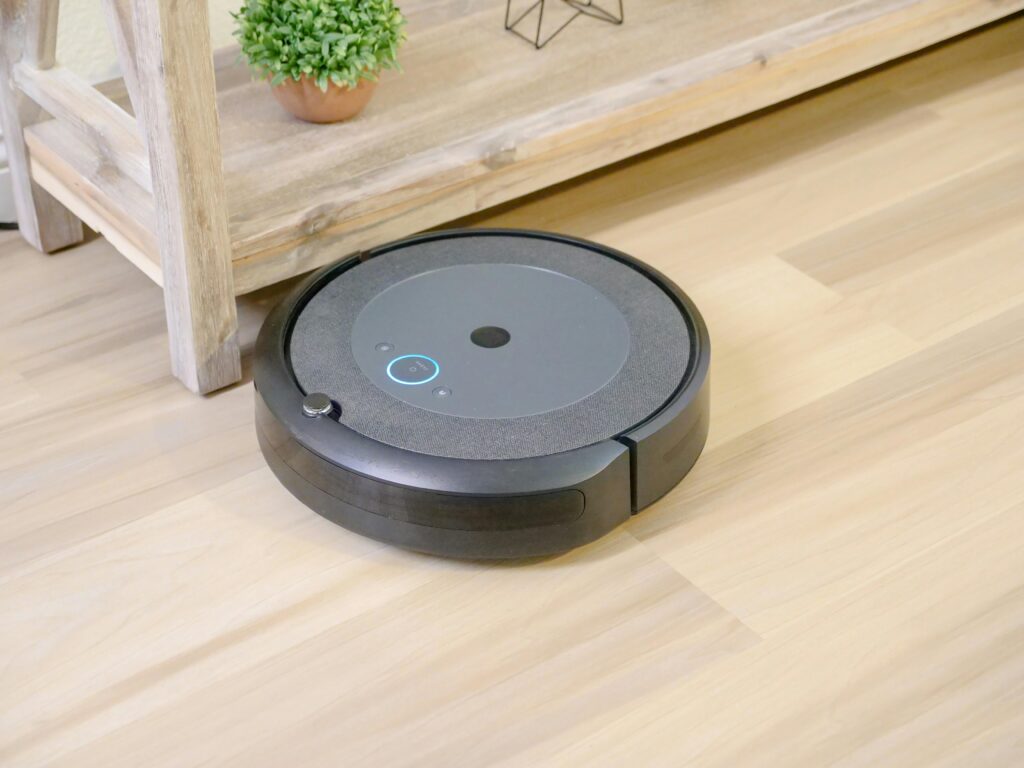
For years, the Achilles’ heel of home automation was the “shag test.” You could have a robot that navigated perfectly around chair legs and mopped hardwood floors to a mirror shine, but the moment it encountered a thick Persian rug or high-pile bedroom carpeting, it would wheeze, stall, and eventually give up.
The fibers of dense carpets act like a trap for standard robot brushes, creating friction that drains batteries and chokes suction motors.
[ad] Discover these new trends and visit the WebtechChannel24.com Shop



However, 2026 has ushered in a new era of floor care. We are finally seeing “Heavy Duty” machines that don’t just skim the surface but dig deep into the base of the carpet. If you have a home filled with plush textures, choosing from the Best Robot Vacuums is no longer just about navigation—it’s about raw torque, specialized brush rolls, and intelligent lift technology.
The Physics of the Plush: Why Most Robots Fail
To understand what makes a robot “heavy duty,” we have to look at the physics of carpet cleaning. On a hard floor, a vacuum only needs enough suction to lift debris into the air stream. On a thick carpet, the vacuum must overcome the “seal” created by the fibers.
Standard robots often suffer from “carpet drag.” When the brush roll is too soft, the carpet fibers wrap around it, slowing the motor. When the suction is too low, the dust mites, pet dander, and fine grit remain buried at the bottom of the pile, acting like sandpaper that wears down your carpet over time. The Best Robot Vacuums for this task utilize high-torque brushless motors that can maintain RPMs even when buried two inches deep in wool.
1. Suction Power: The Pascal (Pa) Revolution
In the past, 2,000 Pa (Pascals) of suction was considered high-end. Today, for thick carpets, we look for machines hitting the 8,000 Pa to 12,000 Pa range. This intense suction is necessary because, in a high-pile environment, much of the air pressure is lost through the gaps in the fibers.
Heavy-duty models now feature “Carpet Boost” technology. Using ultrasonic sensors, these robots detect the change in floor texture instantly. The moment the robot transitions from tile to rug, you can hear the motor kick into a higher gear, maximizing the vacuum’s “lift” capability. This ensures that the Best Robot Vacuums aren’t wasting battery on your kitchen floor but saving their maximum strength for the living room rug.
2. Dual Brush Systems and Anti-Tangle Tech
One brush is rarely enough for heavy-duty cleaning. The industry leaders have shifted toward dual-rubber brush systems. Unlike traditional bristles, which can get “clogged” by thick carpet, dual rubber rollers work in opposite directions to “agitate” the carpet fibers. This motion flicks the dirt upward into the suction path.
Furthermore, long-pile carpets are often accompanied by long-haired pets or residents. High-pile fibers increase the likelihood of hair wrap. The Best Robot Vacuums for 2026 feature active hair-cutting technology or specialized “combs” within the brush housing that automatically untangle hair before it can seize the motor.
3. High-Clearance Navigation
A robot vacuum is useless if it gets high-centered on the edge of a thick rug. “Threshold climbing” is a critical spec for heavy-duty cleaning. The best models now feature retractable wheels or “tank-tread” inspired drive systems that allow them to climb over rug edges up to 22mm high. Without this, the robot treats your thickest rugs as “no-go zones,” leaving the dirtiest parts of your home untouched.
4. Maintenance and Auto-Empty Stations
Deep-cleaning a thick carpet pulls out a surprising amount of “fluff” and dust. A standard on-board dustbin will fill up in minutes when tackling a high-pile rug for the first time. This is why an auto-empty station is mandatory for a heavy-duty setup. These stations use a secondary, powerful vacuum to suck the debris out of the robot and into a sealed bag, allowing the robot to continue its deep-clean cycle without human intervention.
When looking for the Best Robot Vacuums, ensure the base station has a high-capacity bag (at least 3 liters) and a HEPA filtration system, as the fine dust pulled from carpets is often highly allergenic.
Summary of Top Features for 2026
- Suction: Look for 10,000+ Pa for deep-pile agitation.
- Agitation: Dual-rubber rollers are superior to single-bristle brushes.
- Filtration: HEPA-rated filters to capture the fine dander trapped in rugs.
- Obstacle Avoidance: LiDAR combined with AI cameras to ensure the robot doesn’t get tangled in rug tassels.
Choosing among the Best Robot Vacuums means looking beyond the marketing fluff and focusing on the mechanical specs that handle friction and airflow. For a home with thick carpets, the investment in a high-torque, high-suction machine pays for itself by extending the life of your expensive rugs and significantly improving indoor air quality.
Frequent Questions About Heavy Duty Robot Vacuums
Can robot vacuums actually clean high-pile or shag rugs?
Most standard robot vacuums struggle with shag rugs because the long fibers wrap around the wheels and brushes, causing the robot to “beach” itself. However, specialized heavy-duty models with high ground clearance and high-torque motors are designed specifically to navigate and agitate these dense fibers. These advanced machines use ultrasonic sensors to detect the rug and increase suction power to pull dirt from the base of the pile. Success depends entirely on the robot’s “climbing” ability and whether its brushes are designed to resist tangling in long strands.
(Source: Consumer Reports, “Can Robot Vacuums Handle Deep-Pile Carpet?”)
Will a high-suction robot vacuum damage my expensive wool rugs?
High-suction robot vacuums are generally safe for wool rugs, provided they use rubber extractors rather than stiff, aggressive plastic bristles. Rubber rollers are designed to agitate the dirt out of the fibers without “scuffing” or pulling at the delicate wool loops. You should ensure the robot has an adjustable suction setting so you can use a “balanced” mode for daily maintenance and “max” mode only when necessary. Always check if your specific rug manufacturer warns against “beater bar” vacuums, as some handmade rugs require suction-only cleaning.
(Source: The Spruce, “How to Clean and Care for Wool Rugs”)
How often should I run a robot vacuum if I have thick carpets and pets?
If you have thick carpets and pets, it is recommended to run your robot vacuum at least once a day to prevent pet hair and dander from settling deep into the carpet backing. Because thick carpets act as a filter for the air, they trap allergens quickly; daily “maintenance” passes prevent these particles from being kicked back into the air when you walk. Regular daily cleaning also prevents the “matting” of carpet fibers, keeping the pile looking upright and new for a longer period. Using a scheduled “Heavy Duty” cycle ensures the robot focuses its maximum energy on the high-traffic rug areas during every session.
(Source: American Lung Association, “Cleaning Tips for Allergy and Asthma Sufferers”)
These posts might be interesting
- Save Energy: The Best Eco-Friendly Smart Home Gadgets of 2026
- 3 Bio Hacking Gadgets for Better Deep Sleep
- “Future-Smart” Your Home: 7 Must-Have AI Gadgets Making Life Easier in 2026
- Is it time to rethink your (smart) water purifier?[Smart Gadget Upgrade]

![How to create an open shot video super easy? [Step-by-Step-TUTORIAL]](https://www.webtechchannel24.com/Blog/wp-content/uploads/2022/01/Kopie-von-10-secrets-of-successful-people16-1024x576.jpg)