

It’s 6:30 AM in January. Outside, it is pitch black and freezing. Inside, your phone suddenly screams at you in the dark. Your heart pounds, cortisol spikes, and you groggily hit snooze, already dreading the day before your feet hit the floor. This jarring routine used to be normal, but in 2026, we know better. There is a gentler, more biological way to start your morning: the sunrise alarm clock.
Sunrise alarm clocks—also known as wake-up lights—are not just glorified bedside lamps. They are scientifically designed bio-hacks built around your circadian rhythm. Human biology isn’t wired to snap awake to sudden noise in dark caves; we evolved to wake up with gradually increasing sunlight.
The mechanism is simple yet profound. Over a period of 20 to 40 minutes before your set wake-up time, the clock gradually brightens from dim red hues to warm orange, and finally to bright yellow daylight. This light penetrates closed eyelids, stimulating the brain to suppress melatonin (the sleep hormone) and kickstart the production of cortisol (the energy hormone) before you even open your eyes.
[ad] Discover these new trends and visit the WebtechChannel24.com Shop



The result? Instead of being jerked from deep sleep in a panic, you transition naturally into lighter sleep stages until you wake up feeling genuinely refreshed.

Modern wake-up lights have evolved significantly over the last few years. The best models now offer full-spectrum light that accurately mimics the natural dawn color gradient. They integrate soothing natural soundscapes—like distant birdsong or ocean swells—that fade in only as the light reaches peak intensity.
Many now double as wellness hubs, offering “sunset fading” to help you fall asleep and app integration to track your sleep hygiene.
If you are ready to reclaim your mornings from the tyranny of the buzzer, switching to light-based waking is the most impactful change you can make.
Wake Up Light Sunrise Alarm Clock for Kids
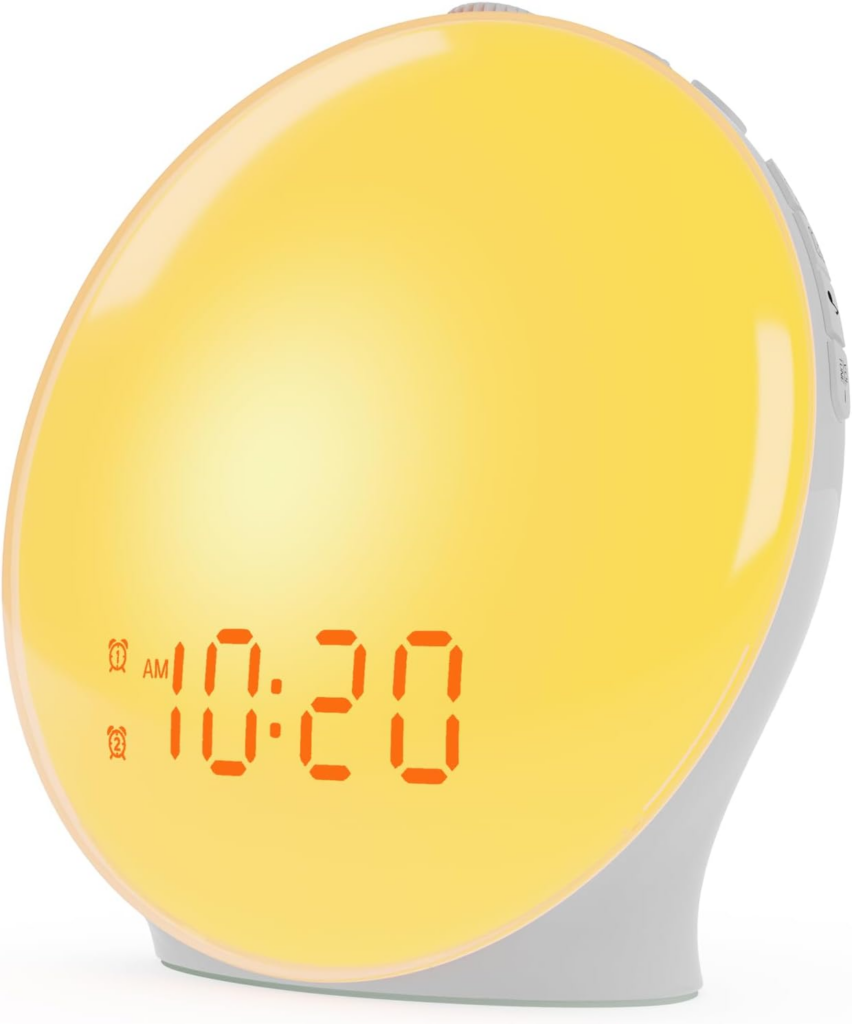
The Top 3 Sunrise Alarms of 2026
If you are ready to invest in better mornings, these three models currently dominate the market, each catering to different needs.
| Feature | Philips SmartSleep Connected | Hatch Restore 3 | Lumie Bodyclock Shine 300 |
|---|---|---|---|
| Best For | The Proven Science Choice | The Routine & Aesthetics Lover | The “Unplugged” Purist |
| Light Quality | Clinical grade, high lux output for effective waking. | Beautiful, customizable color palettes via app. | Certified medical device; very smooth transition. |
| Connectivity | Wi-Fi enabled with sleep tracking capabilities. | Relies heavily on App for setup and features. | None (Fully manual controls, no phone needed). |
| Audio | FM radio and basic nature tracks. | Massive, subscription-based library of sounds/meditations. | High-quality built-in natural sounds + FM radio. |
| Price Point | Premium | Mid-Range | Mid-Range |
| View latest price | View latest price | View latest price |
Frequent Buyer Questions on smart sunrise alarm clocks
Do sunrise alarms actually work for heavy sleepers who are used to loud noises?
Yes, they are surprisingly effective even for deep sleepers because the light affects the brain on a subconscious level before you actually wake up. The gradually increasing light signals the pineal gland to stop producing melatonin, which lightens your sleep stage significantly before the alarm time arrives. 1
By the time the optional audible backup alarm sounds, you are already in a light sleep state and ready to wake up easily. Clinical studies have consistently shown that wake-up lights improve wakefulness and mood better than sound alone.
Is the light bright enough to function as a regular bedside reading lamp?
Most high-quality sunrise alarm clocks today are designed to double as excellent bedside lamps with fully adjustable brightness settings. Top-tier models offer up to 300 lux of light at their brightest setting, which is sufficient for comfortable evening reading without straining your eyes.2
Furthermore, many modern devices allow you to shift the light spectrum to warmer, “sunset” tones in the evening to prepare your body for sleep. You can usually adjust this intensity easily with physical buttons or a smartphone app.
Do I need to keep my smartphone connected to run the alarm clock?
While many of the newest, feature-rich models like the Hatch Restore utilize apps for advanced customization of routines and color palettes, app connectivity is rarely mandatory for the basic alarm function. You can typically set a standard alarm time and light duration using physical interface buttons on the device itself so it runs independently overnight.3
However, skipping the app integration often means missing out on extra features like sleep data tracking, firmware updates, or expanded sound libraries. If you prefer a completely phone-free bedroom environment, brands like Lumie specialize in non-connected models.
How long does the sunrise simulation actually last before the alarm goes off?
The duration of the “sunrise” is almost always customizable on mid-range and premium devices to suit your personal sensitivity to light. Most devices offer a default sunrise setting between 20 and 30 minutes, which sleep experts generally consider optimal for a gradual biological wake-up response.4
Higher-end models allow you to adjust this window anywhere from a quick 10-minute brighten-up to a very slow, hour-long dawn simulation. Experimenting with different durations over a week is the best way to find what leaves you feeling most refreshed.
Would you like to see more tech gadgets for 2026?
Get to know the new Belkin Charging PadWhat are best linkbuilding seo strategies to boost your website?
Here are the best products to sell as a Amazon FBA seller
15 clear advantages of brain training games not only for seniors
Echo Frames introduction: Think smart glasses are just for techies? These are real gamechangers
The Hidden Feature in New AI Web Tools That Most People Are Missing
The Amazfit Band 7 fitness tracker and 2 best alternatives
Sources
- The Sleep Foundation ↩︎
- Healthline ↩︎
- The New York Times / Wirecutter Reviews ↩︎
- John Hopkins Medicine ↩︎