
In the vast digital landscape, a website’s visibility hinges on its ability to be discovered and understood by search engines. This is where technical SEO steps in, laying the foundation for a successful online presence.
But why is it so crucial? Let’s delve into the core reasons why improving crawlability, addressing technical factors, fixing errors, and optimizing site structure are indispensable for SEO success.
One of the most itching questions refers to the very start of your SEO ambitions: The crawling process of the “search engine bot spiders” and it goes….
Why Do I Need to Improve My Website’s Crawlability for Search Engines?

Let me start with an imaginery example. Let’s say you are building a beautiful library but locking the doors. You would never do that? Well, that’s essentially what happens when your website isn’t crawlable. Search engine bots, like Googlebot, are the librarians that index and categorize your content.
If they can’t access or navigate your site efficiently, your pages won’t appear in search results. And as an experienced webdesigner you will know, that a pretty decent number of webpages will never get indexed.
Improving crawlability ensures these bots can discover and understand your content, allowing it to be properly indexed. This means creating a clear site structure, submitting an XML sitemap, and optimizing your robots.txt file to guide crawlers. Without good crawlability, even the most compelling content remains hidden, effectively rendering your website invisible.
Why are the most important technical SEO factors to consider important?
Technical SEO factors, such as site speed, mobile-friendliness, and HTTPS, directly impact user experience and search engine perception. A slow-loading website frustrates visitors, leading to high bounce rates and lower rankings. Mobile-friendliness is non-negotiable in today’s mobile-first world, as Google prioritizes mobile indexing.
HTTPS ensures a secure connection, building trust with users and search engines alike. These factors are important because they collectively contribute to a website’s overall health and usability. Search engines reward websites that provide a positive user experience, making these technical elements vital for achieving higher rankings and attracting organic traffic.
What is a website core web vitals audit?

A website Core Web Vitals audit evaluates a site’s user experience through Google’s key performance metrics. It focuses on Largest Contentful Paint (LCP), measuring loading speed of the main content. Interaction to Next Paint (INP) assesses how quickly a site responds to user actions.
Cumulative Layout Shift (CLS) quantifies visual stability, preventing unexpected page shifts. Tools like Google PageSpeed Insights and Search Console are used to gather performance data.
The audit analyzes this data to identify areas where the website falls short. It then provides specific recommendations for improvements, such as image optimization or JavaScript reduction. These improvements aim to enhance user satisfaction and potentially boost search engine rankings. Continuous monitoring ensures ongoing optimal website performance. Ultimately, a Core Web Vitals audit helps create a faster, more stable, and responsive online experience.
Why Do I Have to Fix Common Technical SEO Errors on My Website?
Technical errors, such as broken links, 404 pages, and duplicate content, can hinder your website’s performance and credibility. These errors confuse search engines, leading to lower rankings and a poor user experience.
Broken links frustrate visitors, while duplicate content can lead to penalties. Fixing these errors demonstrates that you prioritize quality and user experience. Regularly monitoring your website for technical issues and promptly addressing them ensures that your site remains healthy and optimized for search engines. Tools like Google Search Console are invaluable for identifying and resolving these errors, safeguarding your website’s reputation and visibility.
Why Do I Have to Optimize My Website’s Site Structure for Better SEO?
A well-organized site structure is essential for both users and search engines. It creates a logical hierarchy, making it easy to navigate and understand your content. A clear site structure helps search engines crawl and index your pages more efficiently, ensuring that all important content is discovered.
This means organizing your content into logical categories, using descriptive URLs, and implementing internal linking to guide users and search engine bots through your site. An optimized site structure not only improves crawlability but also enhances user experience, leading to higher engagement and better SEO performance.
In essence, technical SEO is the foundation upon which a successful website is built. By prioritizing crawlability, addressing technical factors, fixing errors, and optimizing site structure, you can unlock your website’s potential and achieve sustainable SEO success.
Why do I need a xml sitemap validation?
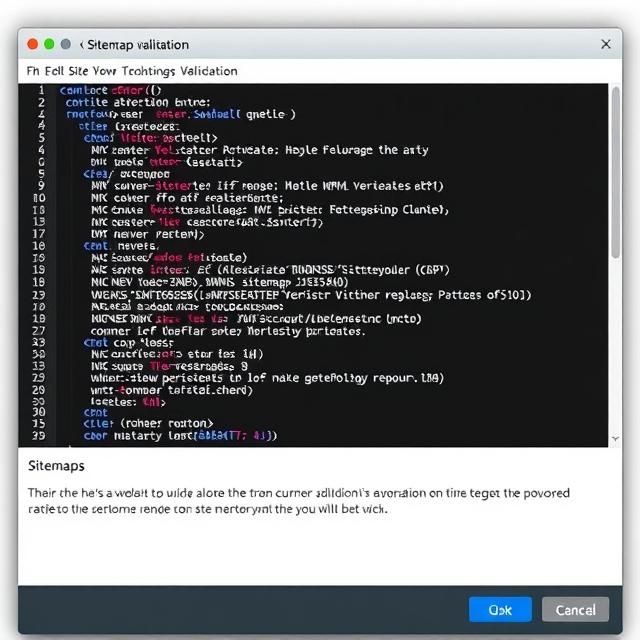
XML sitemap validation is crucial because it ensures search engines can accurately crawl your website. Validating your sitemap helps to identify and correct errors that could hinder indexing. An incorrect sitemap may cause search engines to miss important pages, reducing your site’s visibility. Validation confirms your sitemap adheres to the required XML format, preventing parsing problems. It helps you catch broken links or incorrect URLs that could negatively impact your SEO.
By validating, you guarantee that your sitemap is properly formatted and free of errors. This process improves the efficiency of search engine crawlers, allowing them to better understand your website’s structure. Validating also helps to ensure that all of your important pages are included and prioritized. A valid sitemap contributes to a better user experience by helping search engines deliver accurate search results. Finally, consistent validation practices help to maintain optimal SEO performance.
In 2026, the intersection of Technical SEO and Generative Engine Optimization (GEO) focuses on making your website machine-readable and highly authoritative for AI models like Google Gemini and ChatGPT.
How does site architecture impact GEO visibility?
Modern site architecture must prioritize an HTML-first approach and logical topic clusters to ensure AI crawlers can efficiently extract data without heavy JavaScript processing. In 2026, generative engines rely on “retrieval-augmented generation,” meaning they are more likely to cite your brand if your internal linking creates a clear, semantic knowledge graph of your expertise. 1
Building a central pillar page that connects to granular sub-topics allows AI to recognize your domain as a primary source for specific queries rather than just a collection of keywords. Technical excellence now requires your site to function like a structured database that is as easy for an AI agent to parse as it is for a human to navigate.
What role does Structured Data play in AI-driven search?
Structured data has evolved from a tool for “rich snippets” into a foundational requirement for Entity SEO, allowing AI to accurately identify your brand’s relationship to specific facts and products. Implementing advanced Schema.org markups like Article, FAQPage, and HowTo provides a direct line of communication to Large Language Models (LLMs) that prioritize organized, factual data for their summaries. 2
By 2026, websites that use schema to explicitly define entities—such as authors, credentials, and specific data points—see significantly higher citation rates in AI Overviews. This machine-readable layer acts as a “trust signal” that verifies your content’s accuracy and helps AI engines distinguish your expert insights from generic, unverified noise.
How have Core Web Vitals evolved for the 2026 landscape?
Core Web Vitals remain a critical ranking factor, but the focus has shifted entirely toward Interaction to Next Paint (INP) to measure real-time responsiveness and visual stability. Search engines and AI assistants now treat page speed as a proxy for reliability, as slow-loading sites are often deprioritized by automated agents seeking quick data retrieval. 3
In the GEO era, maintaining a Largest Contentful Paint (LCP) under 2.5 seconds and a Cumulative Layout Shift (CLS) under 0.1 is considered the baseline for competitive visibility on mobile devices. Technical performance is no longer just a “tie-breaker” but a foundational metric that influences whether a page is even considered for inclusion in high-traffic generative responses.

![How to create an open shot video super easy? [Step-by-Step-TUTORIAL]](https://www.webtechchannel24.com/Blog/wp-content/uploads/2022/01/Kopie-von-10-secrets-of-successful-people16-1024x576.jpg)