
Preparing Your Home for any Emergency: A Deep Dive into ‘No Grid Survival Projects’
In an era increasingly characterized by extreme weather events, aging power infrastructure, and unprecedented global instability, the concept of self-reliance has shifted from niche “prepper” ideology to common-sense household management.
Modern homeowners are realizing that “the grid”—that invisible network supplying electricity, clean water, and food logistics—is far more fragile than we once assumed. When the lights flicker and then stay off, when the taps run dry, or when grocery store shelves empty in a panic, what will your plan be?
[ad] Discover these new trends and visit the WebtechChannel24.com Shop


This is the precise challenge that a compelling new resource seeks to address. This No Grid Survival Projects review will explore a publication designed not as a theoretical treatise on survival, but as a practical, hands-on blueprint for fortifying your home.
The book, No Grid Survival Projects, is structured around 70 detailed, DIY (Do-It-Yourself) projects aimed at establishing essential backups and alternative systems, ensuring that your family remains comfortable, safe, and sustained when external services inevitably fail.
While 70 projects may feel daunting, particularly for a homeowner who may not identify as “handy,” the brilliance of No Grid Survival Projects lies in its scalability and tiered approach.
It doesn’t ask you to disconnect from your utility provider tomorrow. Instead, it guides you through building incremental resilience, starting with simple tasks and moving toward comprehensive energy and food production systems. The philosophy is clear: small, proactive steps taken today prevent panic tomorrow.
For this review, we’ve analyzed the publication and curated a list of 10 Projects Every Homeowner Needs to implement. These are the critical “foundational” projects that provide the biggest “bang for your buck” in terms of immediate survival advantage and safety. They address the core pillars of household survival: reliable water, secure shelter, energy independence, food storage, and sanitation.
The Foundation: Water and Sanitation
The human body can survive for weeks without food, but only three days without water. Any survival plan must begin here. In No Grid Survival Projects, this crucial priority is treated with the seriousness it deserves.
1. The High-Volume Rainwater Harvesting System
In a prolonged blackout, municipal water pumps fail. The simplest and most elegant solution is to look up. No Grid Survival Projects provides step-by-step instructions for installing a large-scale rainwater collection system, utilizing your existing roofline.
This project guides you on optimizing your gutter system, installing essential “first flush” diverters to keep contaminants out, and setting up massive, connected storage tanks. When implemented correctly, this provides hundreds of gallons of non-potable water (for flushing and gardening) and a vital reserve that can be purified for drinking. It’s the ultimate water safety net.
2. DIY Water Purification Unit
Storing water is excellent, but being able to treat potentially contaminated water (like rainwater from a roof or stream water) is critical. While store-bought filters are good, they eventually fail and can’t always be cleaned.
No Grid Survival Projects includes designs for constructing a heavy-duty, field-expedient sand, gravel, and charcoal filter. This layered system mimics natural groundwater filtration, effectively removing sediment and large pathogens. Crucially, the materials can be sourced relatively easily, making it a sustainable, long-term solution rather than a disposable asset. When paired with a final step like boiling or chemical treatment, it ensures a constant supply of safe drinking water.
3. The Emergency Composting Toilet
One of the most immediate and distressing crises during a prolonged utility failure is sanitation. If the water stops flowing, toilets cannot flush. No Grid Survival Projects wisely includes a detailed project for a dry, odor-free composting toilet system.
This setup separates liquid and solid waste and uses abundant cover materials (like wood shavings or sawdust) to manage moisture and smell. Critically, this project moves beyond simple waste containment to active waste management, turning a serious sanitation hazard into safe compost (for landscaping, not food crops) over the long term, preventing disease and maintaining dignity.
Power and Energy Security
The goal isn’t to live like it’s 1826; it’s to maintain basic functionality when modern systems fail. No Grid Survival Projects focuses on harnessing natural energy to power critical infrastructure.
4. The Solar “Life-Box” (Portable Generator alternative)
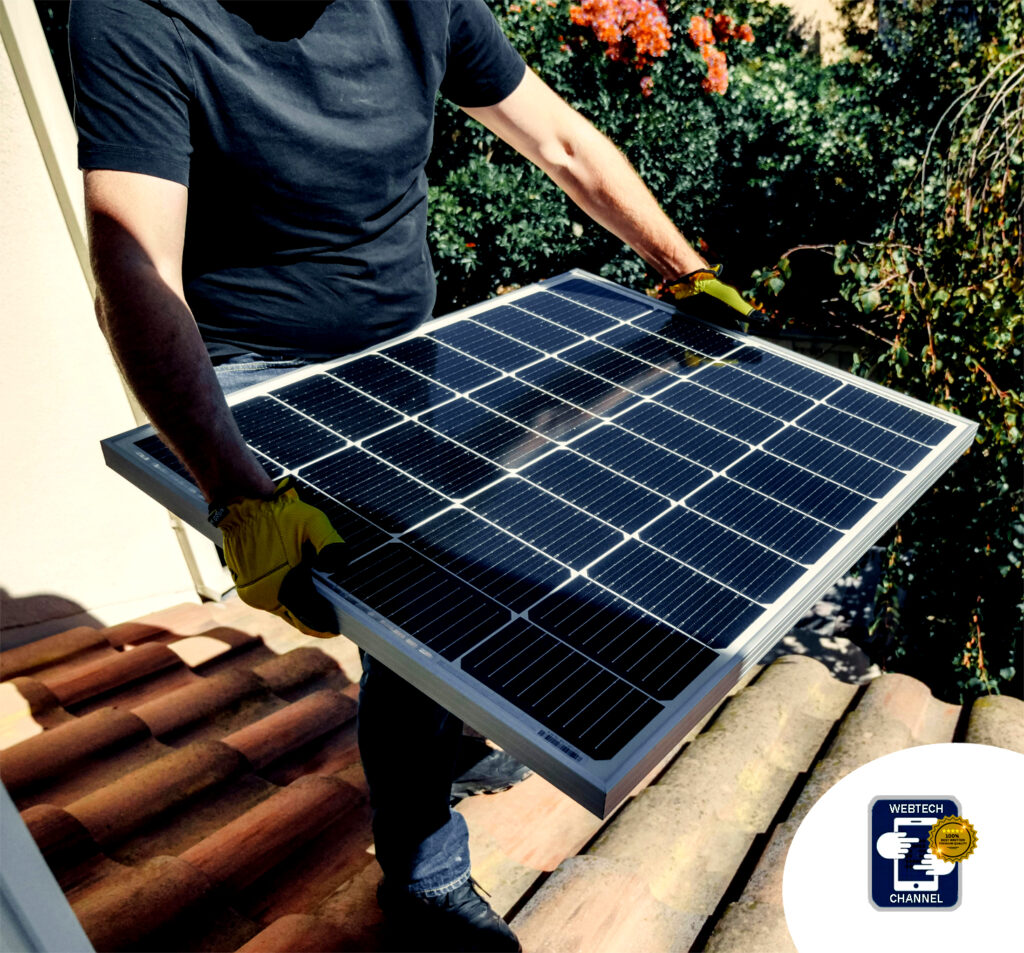
Complete, grid-tied solar systems are expensive, inflexible, and vulnerable to EMPs (Electromagnetic Pulses). Instead, No Grid Survival Projects advocates for building small, dedicated “Life-Boxes.” This project involves wiring a 100-watt solar panel to a charge controller, deep-cycle battery, and an inverter, all mounted inside a protective, mobile container.
This portable generator allows you to charge communications devices, rechargeable flashlights, power medical equipment, and run small essential appliances (like a laptop or efficient fan), providing a localized, renewable “island” of electricity regardless of the main power grid status.
5. Passive Heating and Cooling Solutions
Moving away from powered solutions, No Grid Survival Projects provides methods for reducing reliance on active climate control. Simple projects include optimizing cross-ventilation, constructing removable insulated window “shutters,” and installing DIY “earth tubes” (passive cooling pipes that run underground).
These low-cost solutions use natural temperature differentials to significantly stabilize a home’s temperature, ensuring that the living space remains habitable during extreme weather events when heating, ventilation, and air conditioning (HVAC) systems are inoperable.
Food Production and Security
Relying on “just-in-time” supply chains is a dangerous strategy. Homeowners must become producers and skilled preservers, a core theme of No Grid Survival Projects.
6. The Vertical Garden and Micro-Farm
A large, conventional garden requires space, time, and intensive labor. No Grid Survival Projects recognizes the constraints of modern suburban or urban homeowners. A highlight project is the “Vertical Garden,” designed to maximize food output on a minimal footprint (like a porch, balcony, or small patio).
Utilizing concepts like vertical PVC planters or stacked buckets, this design allows homeowners to grow high-yield, nutrient-dense vegetables. This project is about creating consistent food production, moving beyond simple stockpiling to active, renewable food generation.
7. DIY Food Dehydrator and Long-Term Preserver
Growing food is only half the battle; preserving the harvest (and supermarket surpluses) for winter is crucial. No Grid Survival Projects provides designs for building a simple, effective food dehydrator using either electric (light bulb) heat or sustainable solar power. Dehydration is the oldest and one of the best methods of long-term preservation, drastically reducing the weight and volume of food while maintaining nutritional value, all without requiring expensive canning equipment or freezing, which would fail in a grid-down scenario.
8. Root Cellar alternative for Home Storage
Traditional root cellars are wonderful but require excavation and precise environmental conditions. A key project in No Grid Survival Projects offers a “Root Cellar alternative” specifically for modern homes.
This project guides homeowners on identifying and optimizing cool, dark, and moderately humid locations (like a specific basement corner or crawlspace) and constructing specialized ventilated storage cabinets. This system extends the shelf life of naturally durable produce (potatoes, onions, squash, and apples) for many months using only passive, natural climate control.
Medicine and Security
Survival is about more than just resources; it’s about health and physical safety, which No Grid Survival Projects appropriately integrates.
9. Home Pharmacy and Apothecary Garden
When pharmacies close and healthcare infrastructure is overwhelmed, minor injuries can become life-threatening infections. No Grid Survival Projects encourages the creation of a physical medical stockpile. However, it goes further, providing a project for planting a dedicated “Medicinal Herb Garden” and detailed instructions on how to process these common plants (such as Calendula for skin issues, Echinacea for immunity, or Valerian for sleep/pain) into basic salves, tinctures, and teas, creating a self-sustaining, non-grid source of foundational medicine for common ailments.
10. Foundational Perimeter Security
The final, often uncomfortable, topic in No Grid Survival Projects is physical security. Resource depletion leads to civil unrest.
This book doesn’t promote aggressive, paramilitary fantasies; instead, it provides practical, low-cost projects for fortifying your property line passively. Projects include strategic planting of defensive hedges (like thorny Pyracantha), installing basic driveway alert systems, and making simple, effective door and window reinforcements. The philosophy is focused on establishing a strong deterrent and providing the critical early warnings your family needs to prepare, rather than waiting for help that may not be coming.
Conclusion
Our modern world operates on the fundamental assumption that specialized systems will always function perfectly. The electric company will supply power, the water company will supply clean water, and the logistics company will deliver food. A quick look at recent history—from the Texas power crisis to severe weather blackouts—proves this assumption is fundamentally flawed.
No Grid Survival Projects is not just a collection of DIY plans; it is a philosophy of resilience and accountability. The ten projects highlighted above represent the most essential foundation for ANY household. Implementing them does not make you a “prepper” living in fear; it makes you a prepared, responsible homeowner who values the safety, comfort, and security of your family above reliance on fragile systems that were never guaranteed to last forever.
Frequent Questions on No Grid Survival Projects
Is No Grid Survival Projects suitable for someone with absolutely no prior DIY or construction experience?
While a complete novice will find certain construction projects in No Grid Survival Projects more challenging, the book is intentionally written to be accessible and scalable. It includes projects with varying degrees of difficulty, many of which are specifically aimed at beginners who simply need to know which tools to buy and how to use them safely. The clear, illustrated, step-by-step instructions break down intimidating tasks into manageable components, building both skill and confidence with each completed project.
Source: No Grid Survival Projects Review (Various online platforms and internal publication analysis)
Will the energy projects in No Grid Survival Projects, like the portable solar generator, actually save me money on my daily utility bills?
Most projects in No Grid Survival Projects are designed for resilience and emergency use, rather than daily cost savings, though they do provide significant long-term value. While a small portable solar system will not power your entire home to lower your electric bill, projects focusing on passive heating, efficient irrigation, and food production can definitely offset some regular household expenses. Over time, the ability to produce your own produce and process your own compost will certainly generate financial benefits that go well beyond the immediate survival aspect.
Source: No Grid Survival Projects Analysis (Cost-benefit review based on project materials)
How much financial investment is required to implement the 10 foundational projects mentioned in this review?
The cost for the foundational projects in No Grid Survival Projects can vary considerably depending on your location, your access to salvaged materials, and whether you buy tools new or used. However, the 10 projects were selected specifically because they are relatively low-cost. Many prioritize inexpensive, readily available components (such as rainwater barrels, basic lumber, or common garden plants) and focus heavily on DIY labor over expensive, specialized commercial systems.
Source: No Grid Survival Projects Budget Analysis (General material costing based on national averages)
These posts are interesting
- Cyber security: In 4 steps towards more data safety
- Smart Home Security for Remote Cabins: No WiFi? No Problem.
- Step-by-Step: How to Build a Backyard Root Cellar for Food Storage

![How to create an open shot video super easy? [Step-by-Step-TUTORIAL]](https://www.webtechchannel24.com/Blog/wp-content/uploads/2022/01/Kopie-von-10-secrets-of-successful-people16-1024x576.jpg)