
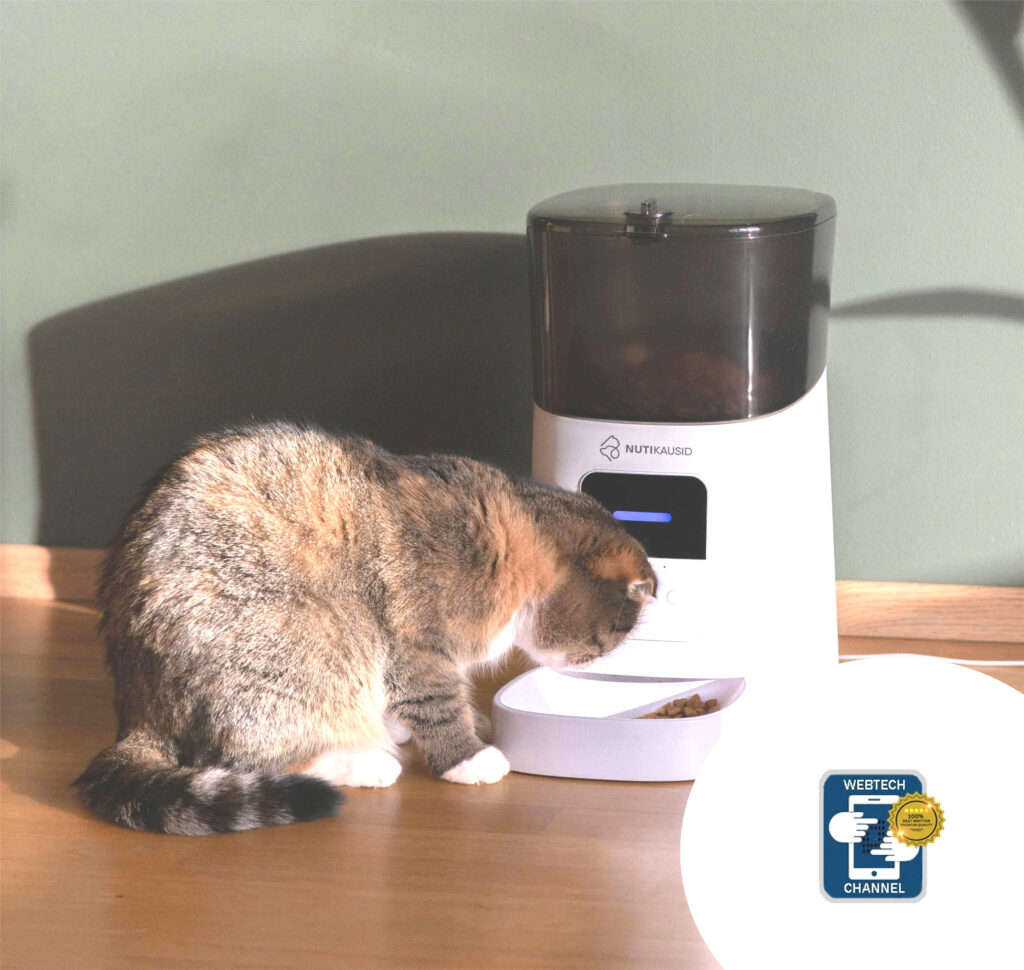
For the modern pet parent, the “guilt” of staying late at the office or grabbing a quick dinner with friends is a universal experience. We stare at our watches, wondering if our cats are pacing by the bowl or if our dogs are giving the pantry door the “sad eyes.”
However, the landscape of pet care has shifted dramatically with the advent of smart home technology. The rise of Automatic Pet Feeders with integrated cameras has transformed a basic chore into an interactive, high-tech experience that offers both convenience and profound peace of mind.
[ad] Discover these new trends and visit the WebtechChannel24.com Shop



This guide explores why these gadgets are becoming essential for urban pet owners, how they function, and what to look for when choosing the best model to ensure your furry friend is fed, watched, and even talked to from anywhere in the world.
The Evolution of the Food Bowl
Not long ago, an “automatic” feeder was simply a gravity-fed plastic hopper that dropped kibble whenever the bowl was empty. While functional, it offered no portion control and zero insights into a pet’s behavior. The current generation of Automatic Pet Feeders is a different beast entirely. These are sophisticated IoT (Internet of Things) devices equipped with HD cameras, two-way audio, and precise portion-dispensing motors.
The integration of a camera is the true game-changer. It’s no longer just about whether the food hit the bowl; it’s about watching the joy on your pet’s face, ensuring they actually eat the meal, and monitoring for any signs of illness or lethargy. In a world where we can monitor our front doors and thermostats from our phones, it only makes sense that we can monitor our pets’ most important time of the day.
Why the Camera Matters: More Than Just a “Cute” Feature
While seeing a “candid” video of your cat crunching on biscuits is undeniably adorable, the camera serves several critical health and safety functions:
Verification of Success: Mechanical jams happen. If you are away for the weekend, a standard feeder might fail without you knowing. With a camera-enabled feeder, you can visually confirm that the kibble was dispensed and consumed.
Monitoring Multi-Pet Dynamics: If you have two cats, is one “bullying” the other away from the bowl? A camera allows you to see the social hierarchy in action, helping you decide if you need a second unit or a microchip-activated feeder.
Appetite Tracking: A sudden loss of appetite is often the first sign of medical issues in cats and dogs. By watching them eat in real-time or reviewing cloud recordings, you can spot changes in eating speed or interest that you might miss if you only see an empty bowl at the end of the day.
Separation Anxiety Relief: Many models feature two-way audio. Being able to call your pet to the bowl with your own voice can soothe an anxious animal and maintain the bond even when you are miles away.
Key Features to Look For in 2026
When shopping for the best Automatic Pet Feeders with cameras, the market can be overwhelming. To find the best fit, focus on these four pillars of tech:
1. Video Quality and Field of View
A blurry 720p image won’t cut it anymore. Look for 1080p HD or 2K resolution. More importantly, check the “Field of View” (FOV). Some cameras point directly at the bowl, while others have a wide-angle lens that lets you see the surrounding room. If you want to see your pet approaching from across the kitchen, a 130-degree or wider FOV is ideal.
2. Night Vision and Motion Alerts
Most pets are active in the early morning or late evening. Infrared night vision ensures you aren’t just looking at a black screen during the 5:00 AM breakfast feeding. Furthermore, advanced AI motion detection can send a “Pet Activity” alert to your phone the moment your cat sits in front of the feeder, so you don’t have to watch the live feed all day.
3. Clog-Prevention and Power Backups
The best Automatic Pet Feeders utilize “anti-clog” designs—usually a silicone impeller or a reversing motor—to handle various kibble shapes and sizes. Additionally, always choose a model with a battery backup. If your Wi-Fi goes down or you have a power flicker, the internal schedule saved on the device should still trigger the motor using D-cell batteries or a built-in lithium-ion pack.
4. App Ecosystem and Storage
Does the app play well with your phone? Some brands offer free cloud storage for “event” clips (like a 10-second video of the feeding), while others require a monthly subscription. If you prefer not to pay a fee, look for a feeder with a local microSD card slot so you can save recordings directly to the device.
Integration with the Smart Home
In 2026, Automatic Pet Feeders are rarely standalone items. Many now integrate with Amazon Alexa or Google Assistant. Imagine saying, “Alexa, ask the feeder to give Bella a snack,” and watching the camera feed pop up on your Echo Show. This level of integration makes pet care a seamless part of your home automation, allowing you to manage schedules alongside your lights and security cameras.
Managing Portion Control for Health
Obesity is a leading health crisis for domestic pets. One of the primary advantages of using Automatic Pet Feeders is the ability to dispense “micro-meals.” Instead of two large meals that a pet might inhale and then vomit, you can schedule six small feedings throughout the day. This mimics a more natural hunting/foraging pattern and keeps their metabolism steady. The camera helps you verify that they are staying lean and active, providing a holistic view of their wellness.
The Psychological Benefit for the Owner
We often talk about the benefit to the pet, but the benefit to the human is just as high. The “check-in” during a lunch break becomes a highlight of the day. Seeing your pet healthy and fed reduces the stress of travel and long work hours. It turns a “smart appliance” into a bridge of connection.
Frequent Questions About Automatic Pet Feeders
Can automatic pet feeders work with wet food or only dry kibble?
The vast majority of camera-equipped Automatic Pet Feeders are designed strictly for dry kibble, as wet food requires refrigeration to prevent spoilage and can easily jam the dispensing rotation. Some specialized “tray-style” feeders use ice packs to keep wet food fresh for a few hours, but these rarely include integrated cameras or high-capacity hoppers. For now, if you need to monitor wet food consumption, it is best to use a standalone pet camera directed at a traditional bowl. If your pet has a strict wet-food diet, look into the emerging “refrigerated” smart feeders currently entering the premium market.
(Source: American Kennel Club, “Choosing the Right Automatic Feeder for Your Dog”)
How do I prevent my pet from knocking over the feeder to get to the extra food?
High-quality Automatic Pet Feeders are designed with a low center of gravity and non-slip feet to prevent “tip-overs” by enthusiastic eaters. Many models also include a locking lid mechanism that requires a human-like grip to open, ensuring that even the most clever cats cannot “break in.” For larger dogs, some owners choose to secure the feeder to a wall or place it inside a heavy wooden enclosure to ensure it remains upright. If you have a particularly destructive pet, look for models made with reinforced ABS plastic rather than thin, translucent materials.
(Source: PetMD, “Tips for Using Automatic Feeders Safely”)
Is the video footage from pet feeder cameras secure from hackers?
Security is a valid concern for any camera inside your home, so it is vital to choose brands that use End-to-End Encryption (E2EE) for their video streams. Always change the default password during setup, keep the device’s firmware updated through the app, and enable Two-Factor Authentication (2FA) if the manufacturer supports it. Avoid “no-name” generic brands that do not have a clear privacy policy or a history of security updates. By following these standard IoT safety protocols, you can ensure that you are the only one watching your pet enjoy their meal.
(Source: Consumer Reports, “How to Secure Your Smart Home Cameras”)
Conclusion: A Smarter Way to Love
Investing in one of the best Automatic Pet Feeders with a camera is an investment in your relationship with your pet. It removes the mechanical worry of “Did they eat?” and replaces it with the joy of “Look at them eat!” As technology continues to evolve, these devices will only become more intuitive, perhaps one day using AI to detect even the slightest changes in health before we do. For now, the ability to pull out your phone in a meeting, see a clear picture of your happy cat, and drop a few pieces of kibble with a tap is a modern miracle of pet ownership.
These posts might also be interesting
- How to publish a book on Amazon: A step-by-step practice
- Rich Results Test Guide: How to boost your website performance
- 4 central steps to AFFILIATE MARKETING for Beginners [FREE pdf]
- Free crypto rewards: New opportunities in ’26 [Review]
- How to make money from home as a student?
- How to make MONEY WITH BOOKS?
- How to make BIG MONEY with CRYPTO in 2026
- What are BEST SEO BACKLINK STRATEGIES 2026? [FREE GUIDE]
- Why technical SEO really matters – Unlocking the full potential
- Learn today why BACKLINK QUALITY is so important [FREE GUIDE]