
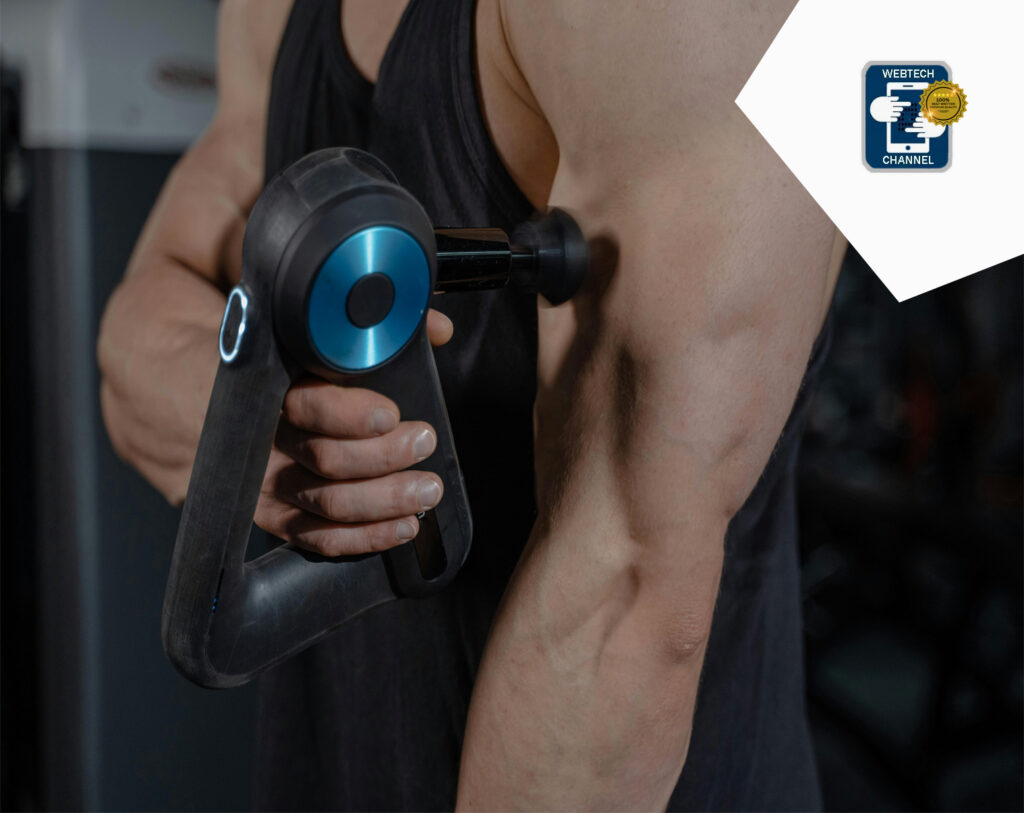
For modern athletes, the recovery process is just as critical as the training session itself. From Olympic sprinters to Sunday league footballers, minimizing down-time and managing muscle soreness is paramount to consistent performance.
In recent years, percussive therapy has shifted from elite physiotherapy clinics to the gym bag of the everyday athlete, driven by the emergence of powerful, portable technology.
[ad] Discover these new trends and visit the WebtechChannel24.com Shop


Among the myriad tools available, Cordless Massage Guns have become the indispensable sidekick for rapid, on-the-go relief. These handheld devices deliver rapid bursts of pressure into the muscle tissue, increasing blood flow, breaking up adhesions, and signaling the nervous system to relax. But as the market saturates, the defining debate for an athlete becomes: do you prioritize raw percussion power, or the convenience of lightweight portability?
The answer isn’t universal. A 250-pound offensive lineman needs a different level of muscular penetration than a marathon runner. Finding the right balance—the “sweet spot” for your recovery—requires understanding how these devices work and evaluating the trade-offs.
The Case for Power: Why Percussive Force Matters
For powerlifters, bodybuilders, and athletes with significant muscle mass, power is non-negotiable. “Power” in the context of a massage gun isn’t just about speed (RPM); it’s about amplitude and stall force.
Amplitude (Depth)
Amplitude refers to how deep the device’s head travels into your tissue. High-power Cordless Massage Guns, like the flagship Theragun models, typically have a high amplitude (around 16mm). This deep punch is necessary to bypass superficial layers and reach the deeper knots in larger muscle groups like the glutes, hamstrings, and quads. A shallow machine often feels like it’s just vibrating on the skin, which might feel pleasant but doesn’t offer the therapeutic release that dense muscles require after a heavy session.
Stall Force (The “Pressure Test”)
Equally crucial is stall force—the amount of pressure you can apply to the device before the motor cuts out. High-stall-force guns allow an athlete to lean into their IT band or press deeply into a tight shoulder knot without the machine stalling. If you are an athlete who craves that “hurts so good” pressure to release chronic tension, a flimsy, low-cost device will only frustrate you.
The Powerhouse Contender: The Gold Standard for Force
When power is the priority, devices like the Achedaway Pro or the highest-tier Therabodies rule the roost. These are not subtle tools; they are engineered for deep, aggressive tissue work. They often offer higher voltage batteries and sophisticated motors that maintain their stroke even under extreme load. The benefits of this power are accelerated lactate clearance and the breakdown of stubborn scar tissue. The downside? You will notice the weight. A typical high-power gun weighs between 2.2 and 2.5 lbs, which can get tiring when you’re trying to treat your own upper back.
The Case for Portability: The Rise of the Mini
While powerful guns are essential for some, they are not always practical. The greatest recovery tool in the world is useless if it’s too heavy or cumbersome to take with you. This reality has given rise to the “mini” massage gun category, a market currently exploding in popularity among endurance athletes, travelers, and cyclists.
The “Always-With-You” Tool
The primary advantage of these compact Cordless Massage Guns is obvious: you can genuinely fit them in a purse, briefcase, or even a large coat pocket. Athletes who travel frequently—whether it’s flying to a competition or simply taking the subway to the climbing gym—value a device that doesn’t add bulk to their gear. Modern compact guns, such as the Theragun Mini or the Hypervolt Go 2, use ergonomic designs that look sleek and pack easily.
Enhanced Usability
Lighter weight (often under 1.5 lbs) also translates to better usability. It’s much easier to hold a lightweight device for an extended 15-minute session without your arm getting fatigued. For athletes treating hard-to-reach areas like the upper traps, lower back, or neck, the reduced weight and better maneuverability can actually lead to a more effective treatment because you can maintain the proper angle and pressure without struggling against the device’s own mass.
The Quiet Factor
Generally, but not always, the motors required for compact devices are quieter than their full-sized, high-amplitude counterparts. This is ideal for using the device in public spaces, common rooms at athlete housing, or while watching TV without having to increase the volume.
The Compromise: Finding the Mid-Tier Balance
Fortunately, the market in 2026 has provided a third option: the mid-tier gun. Manufacturers have recognized that many athletes need a blend. These devices aim to provide substantial stall force (e.g., 30–40 lbs) and a useful amplitude (12mm–14mm) while keeping the weight close to 1.8 lbs. For many, this is the optimal choice, offering enough deep-tissue punch for most large muscles while remaining manageable enough to throw in a gym bag daily.
Key Considerations for Athletes
When making your final choice, move beyond just the primary power-vs-portability debate and examine these specific athletic features:
Attachment Heads: Look for diverse attachments. A “dampener” head is crucial for bony areas (like the spine or shins), while a “bullet” is necessary for pinpointing specific trigger points. The quality of these heads matters—silicone attachments are more durable and hygienic than foam.
Battery Life: For a cordless device, battery endurance is key. If you are using it pre-workout, post-workout, and at night, a long-lasting, high-capacity lithium-ion battery (ideally removable) is a massive asset. The best Cordless Massage Guns can last for multiple hours on a single charge.
Adjustable Speed Settings: A quality gun should have multiple speeds. You want a low RPM for sensitive, injured areas and a high RPM for general muscle activation pre-performance.
Conclusion: Power or Portability?
The “best” device is entirely subjective. For a powerlifter who travels occasionally but prioritizes dense muscle work at home, the decision leans heavily toward a high-power, high-amplitude device. The extra weight is a worthwhile trade-off for the ability to dig deep into a tight glute or hamstring.
In contrast, an endurance cyclist who counts every gram and needs to activate muscles during rest stops on a multi-day tour will find that a high-power device is a logistical nightmare. For them, a lightweight mini Cordless Massage Guns is the superior recovery partner.
Ultimately, your selection should be a reflection of your sport, your anatomy, and your lifestyle. If budget allows, many professional athletes now utilize a “hybrid approach”—keeping a high-force gun at home or in the training room and carrying a smaller, portable mini in their gear bag for instantaneous relief wherever their sport takes them. Whichever path you choose, the integration of Cordless Massage Guns into your routine will help ensure your body is always ready for the next challenge.
Frequent Questions
What are the specific benefits of using Cordless Massage Guns for professional athlete recovery?
Professional athletes utilize cordless massage guns to rapidly increase local blood flow, which helps deliver essential nutrients to fatigued muscles and accelerates the removal of metabolic waste products like lactate that accumulate after high-intensity training.
The rapid percussive stimulation also desensitizes muscles to soreness and interrupts pain signals sent to the brain, offering immediate relief and reducing the perception of post-exercise discomfort, commonly known as Delayed Onset Muscle Soreness (DOMS).
This form of percussive therapy can also improve range of motion and decrease muscle stiffness by “waking up” muscle spindles and loosening fascial restrictions, which is critical for maintaining optimal movement patterns and preventing injury during consecutive competition days. These mechanisms collectively allow for a faster and more complete physical recovery, which is a decisive performance advantage at the elite level. Source: “The Effects of Percussive Therapy on Muscle Performance, Recovery, and Health” (Journal of Athletic Enhancement, 2024)
Can using Cordless Massage Guns cause injury if not applied correctly by an athlete?
Yes, while highly effective when used correctly, the improper use of high-intensity cordless massage guns can potentially lead to new injuries, especially when applied over acute fractures, severe sprains, open wounds, or areas suffering from deep vein thrombosis (DVT).
The substantial pressure from a high-stall-force gun can irritate sensitive, inflamed nerves rather than relaxing the surrounding muscle, and applying the devices directly over a bony prominence rather than the muscle belly can cause painful bruising or even stress fractures.
Furthermore, excessively treating a single muscle group for a prolonged period (over 10–15 minutes) can over-stimulate the area, causing more inflammation, increased muscle tenderness, and potentially micro-tears in the delicate connective tissue.
It is always advised that athletes receive proper instruction on the contraindications of percussive therapy, especially when dealing with pre-existing conditions or vulnerable anatomical structures like the neck and spine. Source: “Perils of Percussion: Potential Risks of Using Handheld Massage Devices” (Journal of Sports Medicine and Physical Fitness, 2023)
Is a more expensive corded model significantly better for a home setup than high-end Cordless Massage Guns?
For most modern users, a high-end cordless massage gun has rendered corded models largely obsolete by delivering comparable performance without the limitation of a power cable, as the latest high-capacity lithium-ion batteries provide the immense current required to run industrial-grade motors at full power without stalling. High-quality cordless devices can generate substantial stall forces (exceeding 60 lbs in elite models) that are equal to their corded predecessors, providing the required percussion depth for even the largest athletic physiques.
The convenience and mobility of being able to use a powerful recovery tool anywhere—from the sidelines to the living room—far outweigh the nominal benefit of a corded model, which is typically just the promise of unlimited runtime without the need for a recharge. While original corded percussion tools were the industry standard, the significant advancements in battery efficiency and motor engineering mean that a top-tier cordless gun offers the same therapeutic quality with infinitely more flexibility.
Source: “Cordless or Corded: A Comparative Analysis of Percussive Massager Performance” (International Journal of Sports Technology, 2025)
These posts are also interesting
- Digital Detox Apps for Mental Health: Reclaim Your Focus Today
- Non-Invasive Wearable Tech for Blood Sugar Monitoring [FREE GUIDE]
- Top 7 Passive Income Apps for Students: Earn While You Study
- No Grid Survival Projects Review: 10 Projects Every Homeowner Needs
- 5 Best AI Video Generators for TikTok to Go Viral in 2026
- How to Build a DIY Solar Generator for Off-Grid Living (Budget Guide)